Flame, Ash & Clay - a Summer of wood-firing
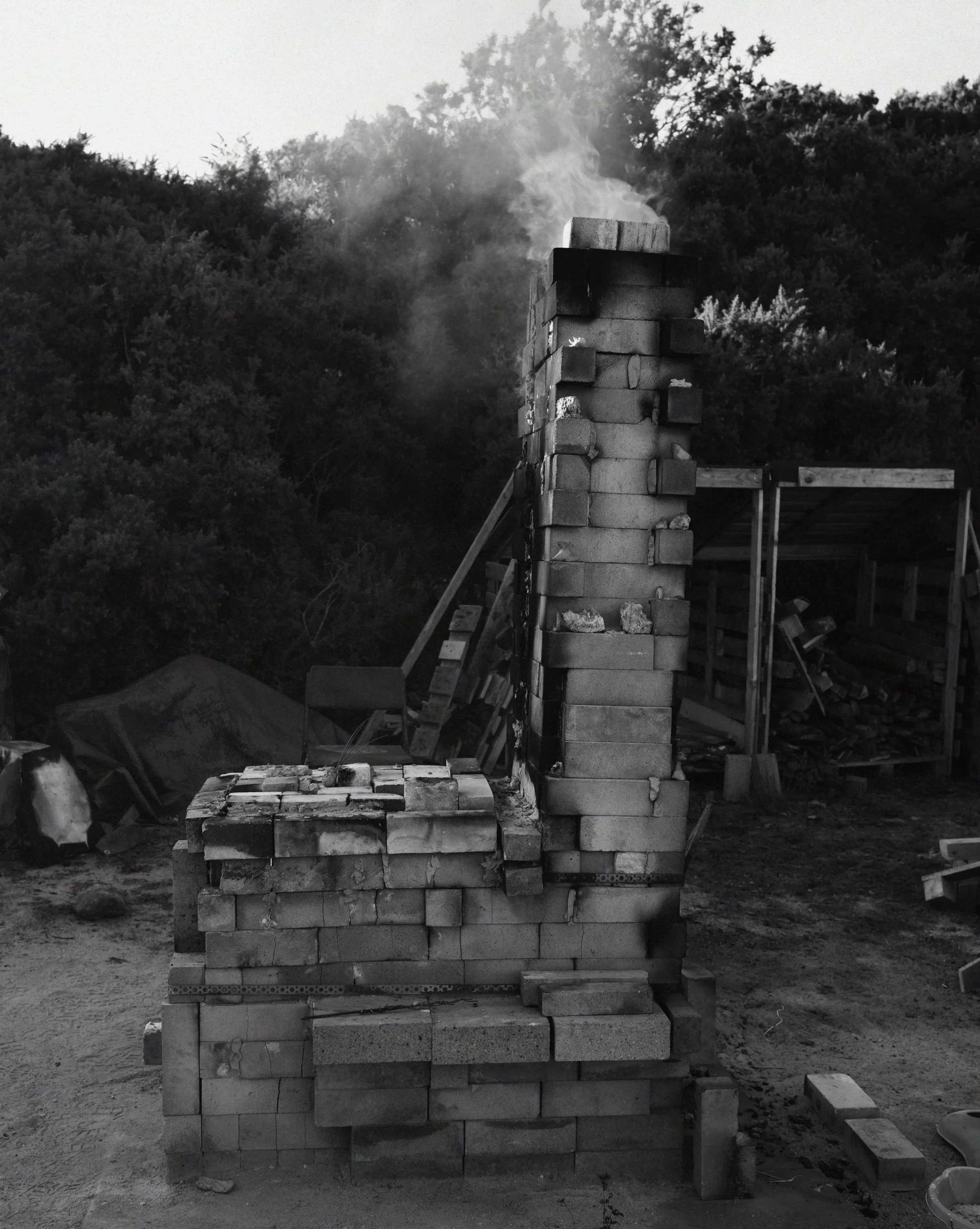
Throughout this Summer I have been experimenting with wood-firing for the first time, after almost 9 years of working with clay and solely electric firing.
In August I spent three days with friend and potter Caitlin Clarke at Brickfield, a project led by Rosanna Martin in a disused china clay pit near St Austell. Caitlin and I met a few months ago when we both took part in a training course with Rose and decided to work towards a firing together.
Wood-firing is a completely different process to firing an electric kiln. It requires planning, constant monitoring and a lot of hard work to get the chamber within the bricks up to temperature. When we wood-fire, we’re aiming for around 1280 - 1320 degrees Celsius. We managed to get to 1300, which took around 10 hours of constant stoking from start to finish with waste pallet wood.
The next morning, the kiln had cooled enough to open. At this point I had taken part in two firings, both with larger groups with only a couple of pots and a handful of test tiles in each, so I was nervous to unload. We unbricked the top of the kiln and revealed our treasure: gleaming, glossy and earthy work. We were both elated.
I used a combination of new glazes across my work that I have slowly been developing and testing in firings this summer - mainly using Oak and Hornbeam wood ash from fireplaces, birch wood ash from a sauna, granite waste dust from a local quarry, shino glazes made from industry waste clay and other found, foraged and waste materials. The results were incredibly encouraging, and the firing gave me a lot of information to bring forward into the next wood firing I had in my diary. Although, this one was going to be a little different, and quite an adventure…
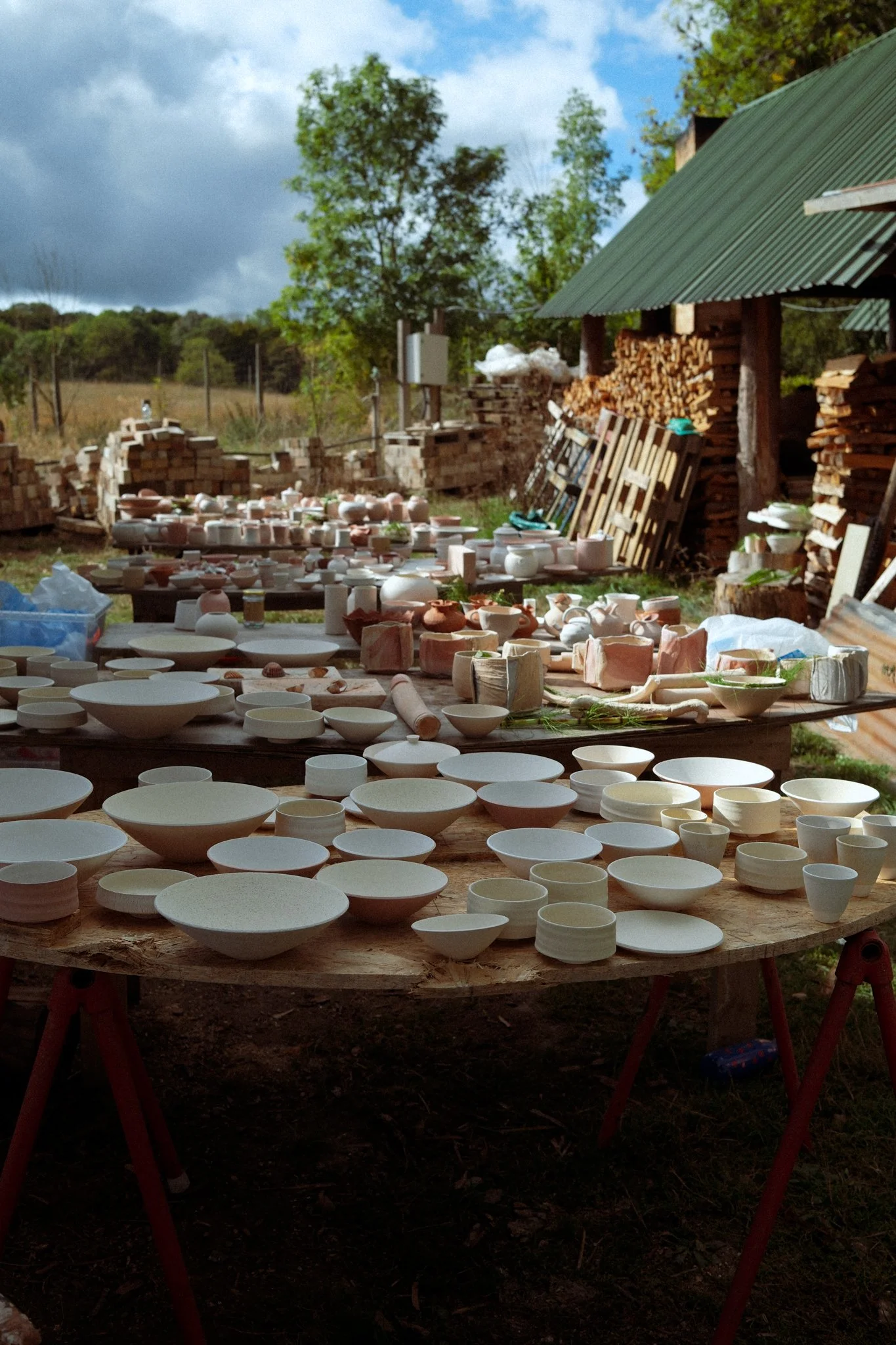
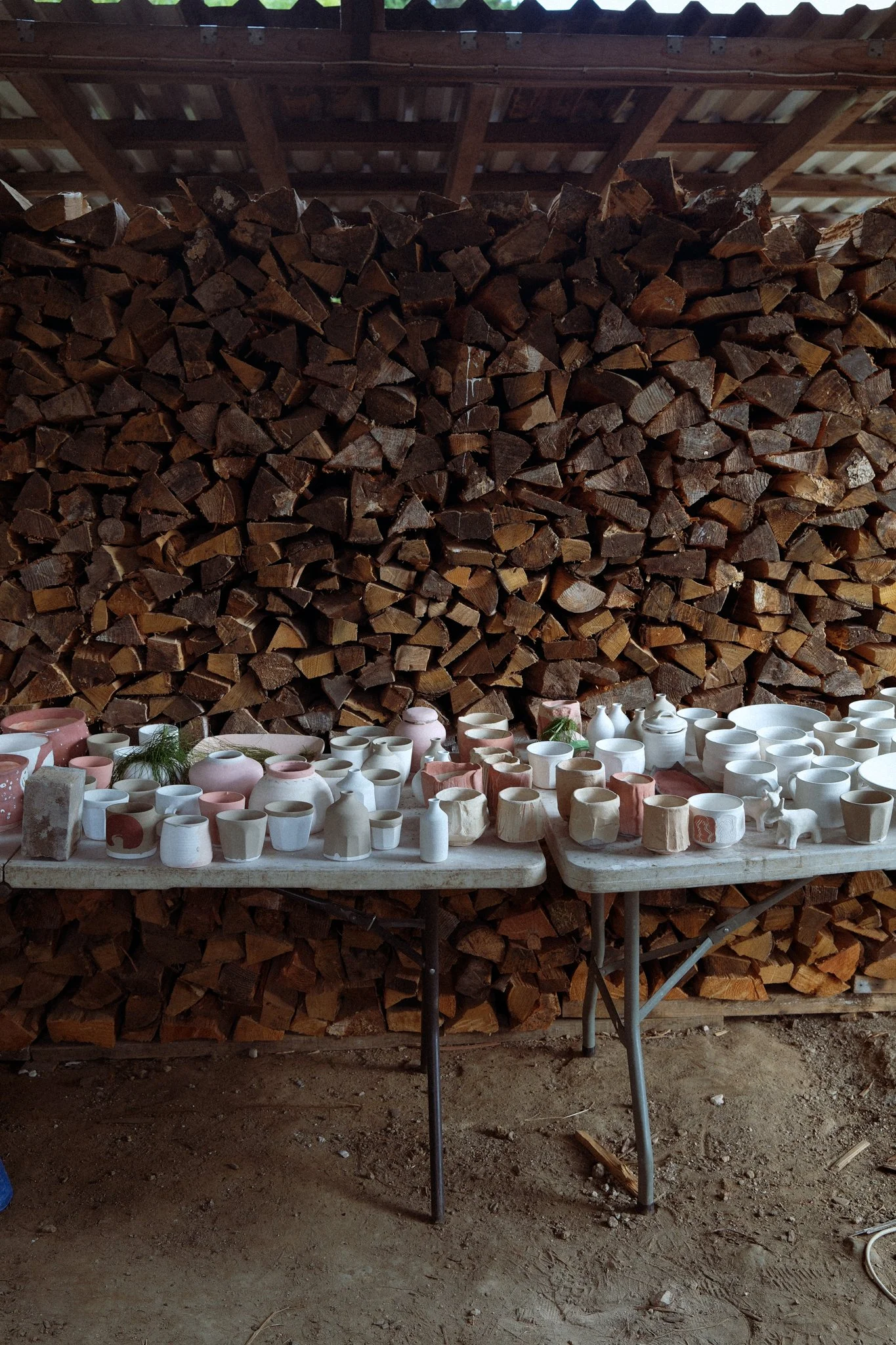
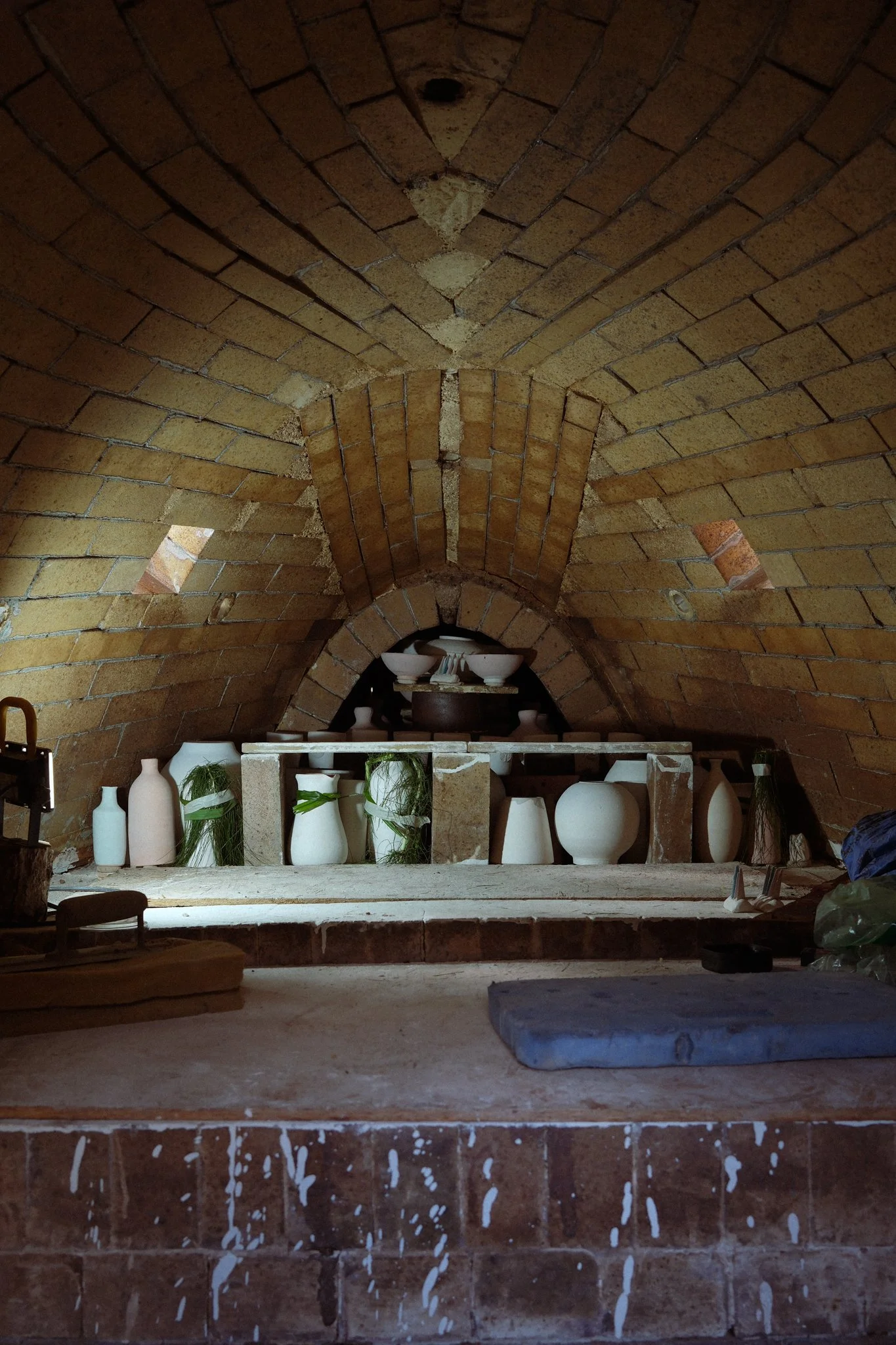
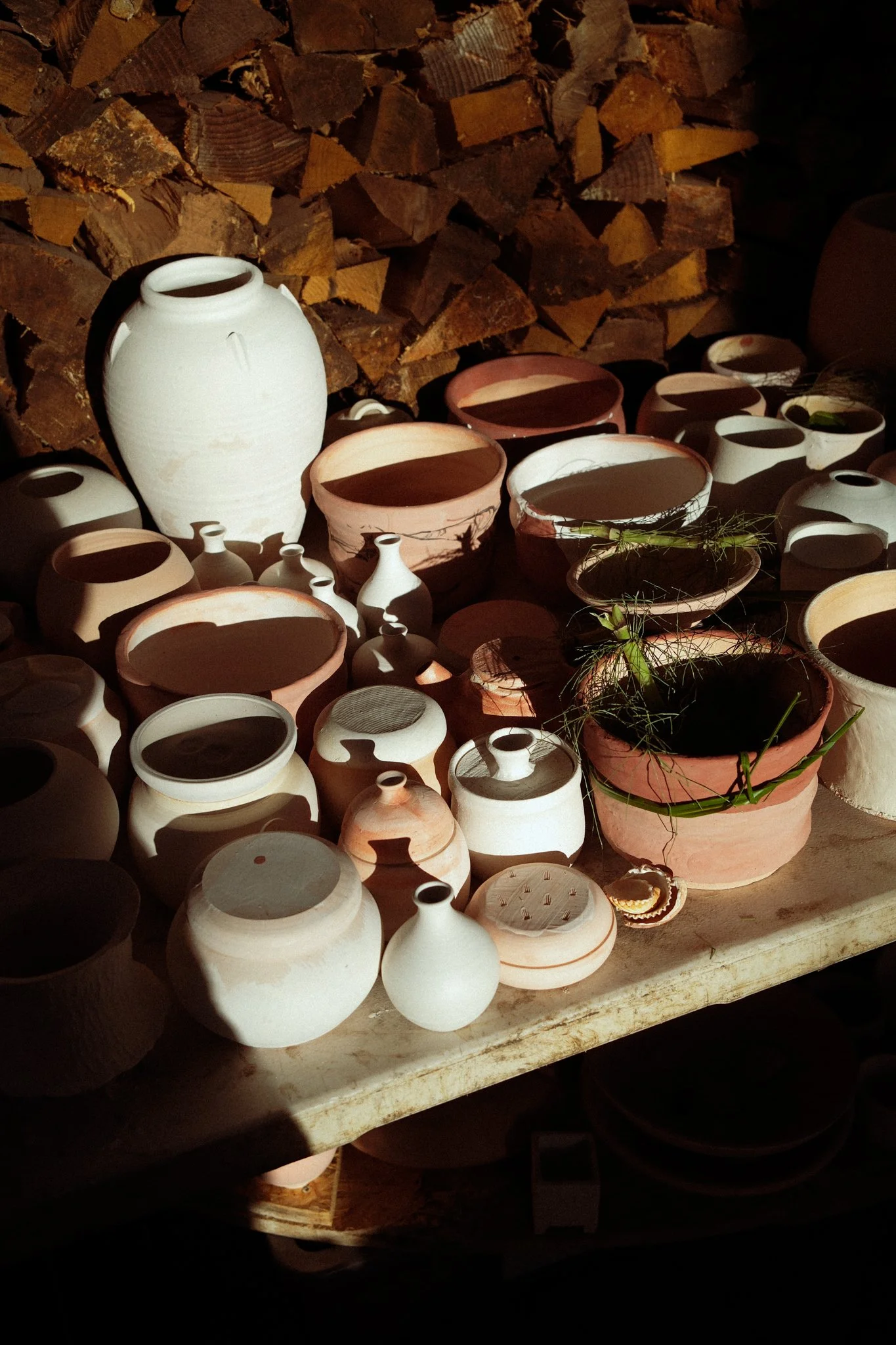
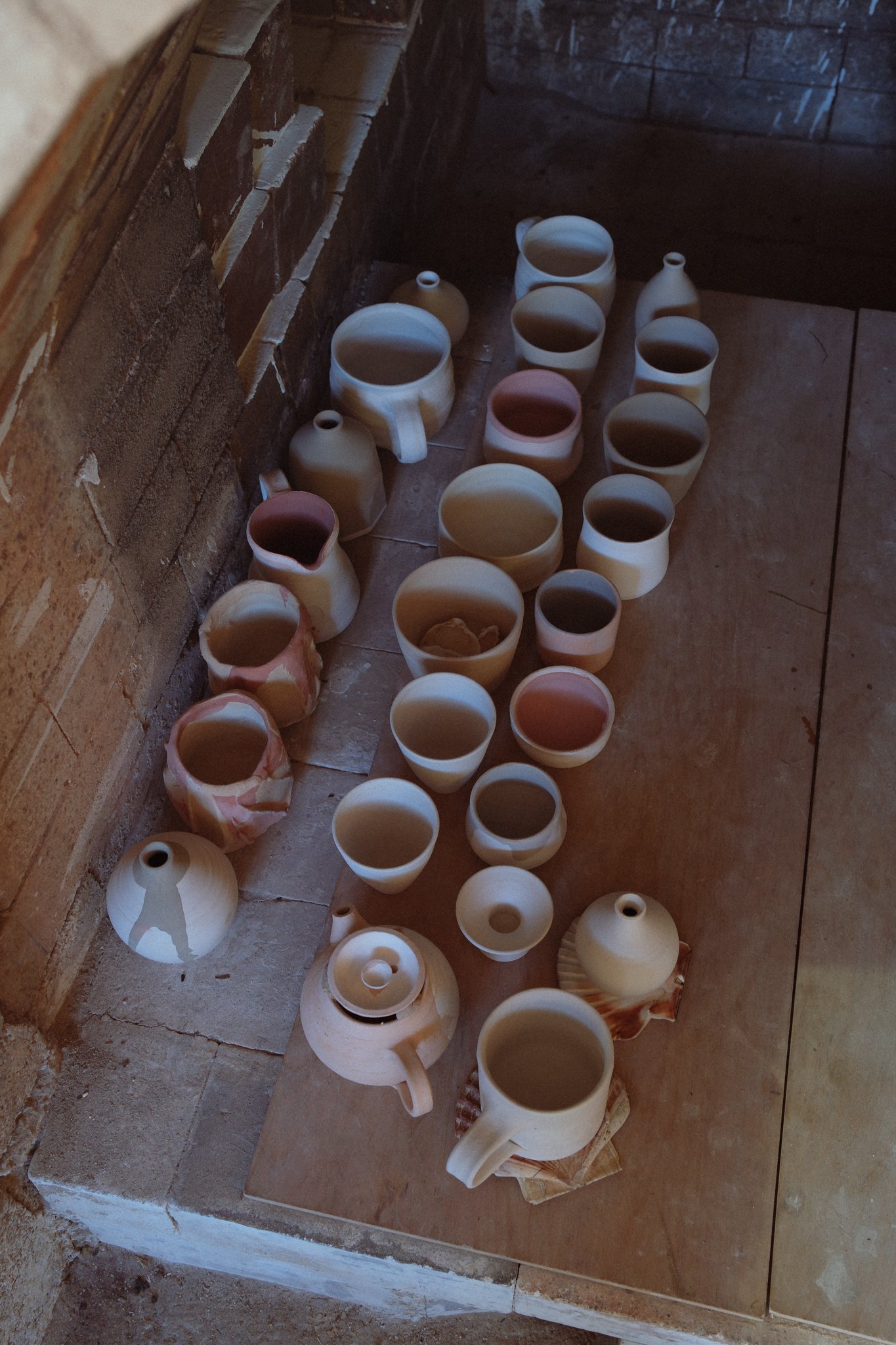
At the end of September, I travelled from Cornwall to Oxford to take part in my first Anagama firing under the guidance, knowledge and patience of Svend Bayer and Brigitte Colleaux - with a team of 10 other potters.
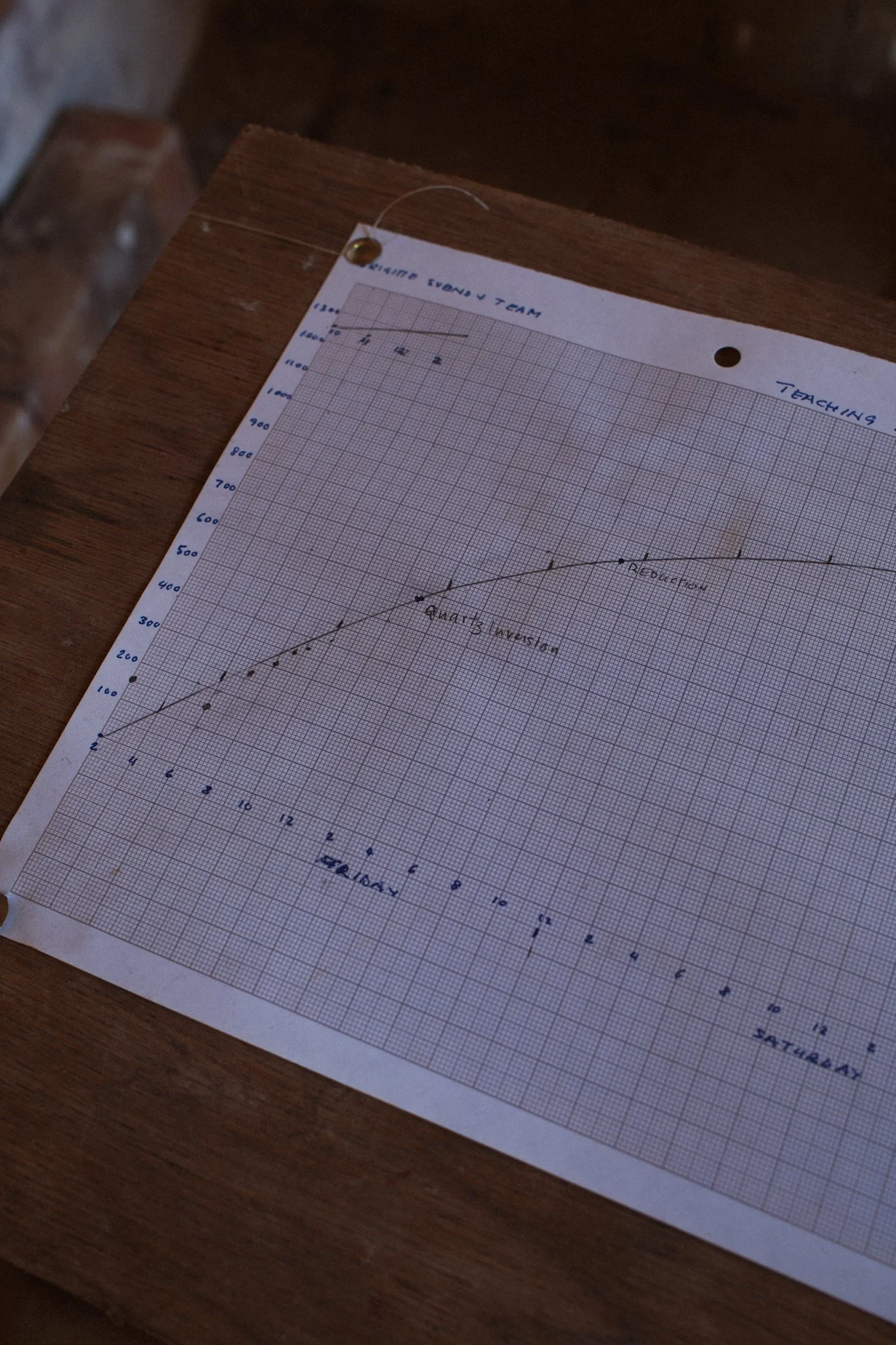
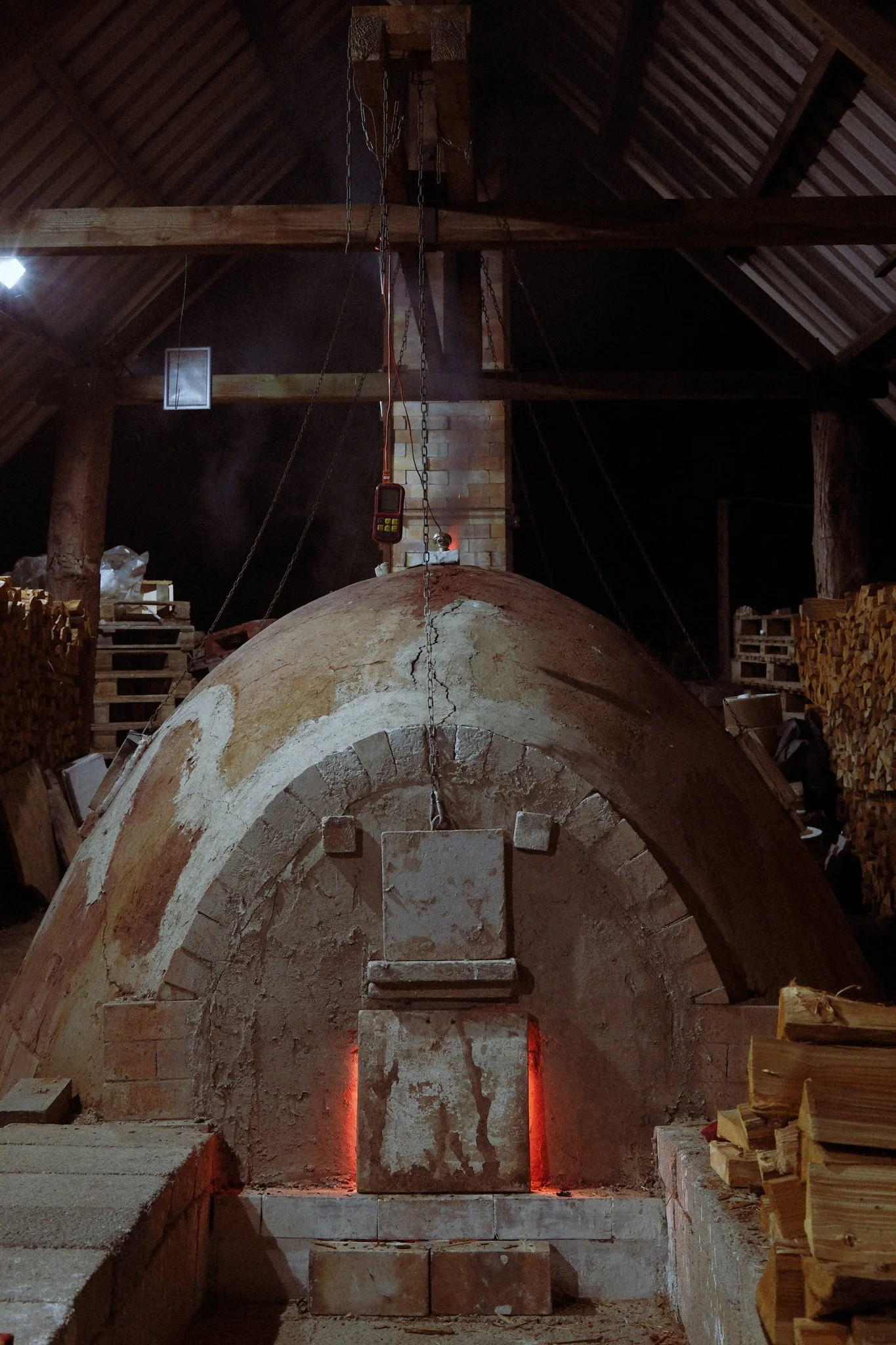
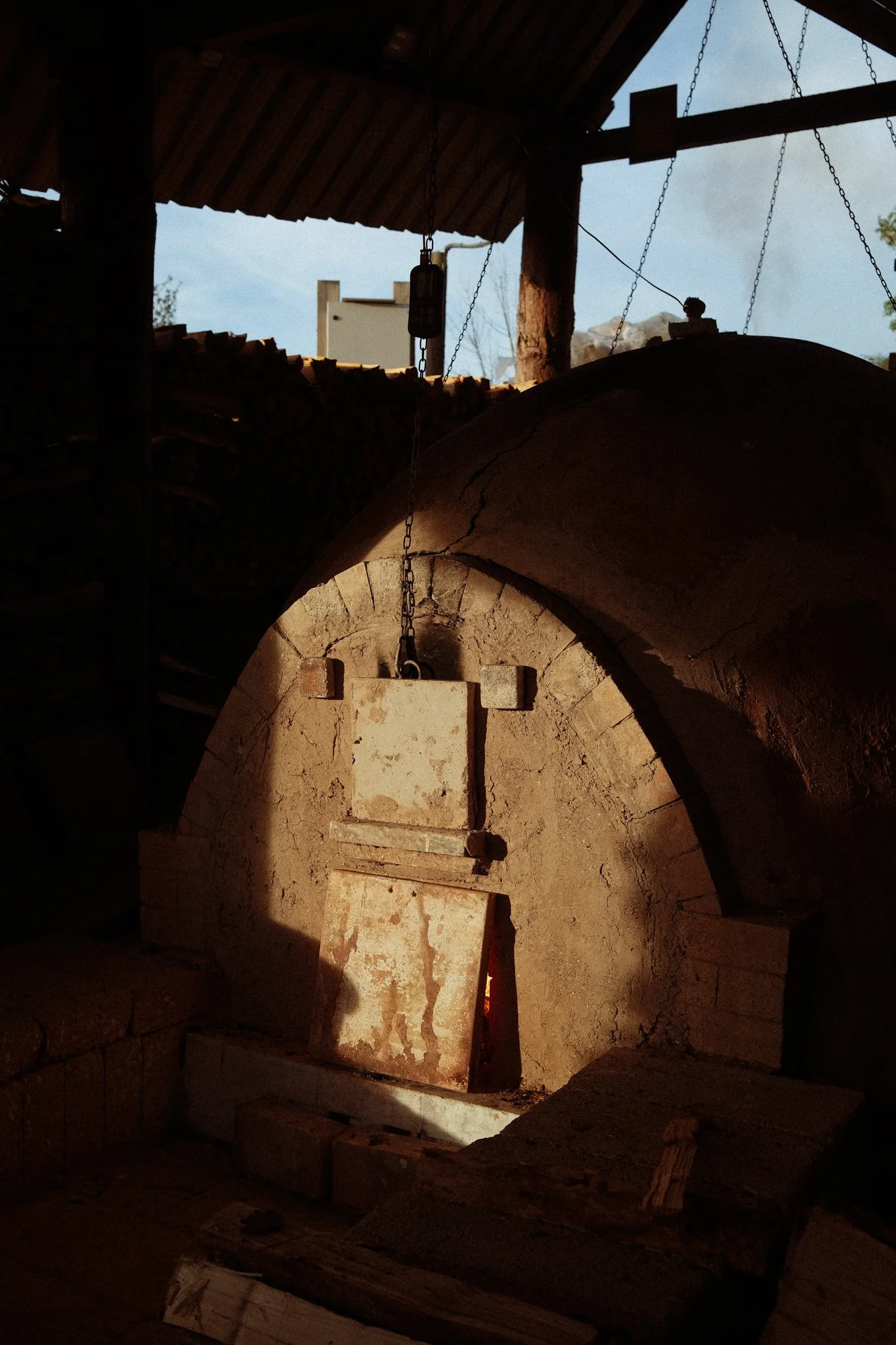
Unlike a fast-fire wood kiln, which can reach temperature in a few hours, firing an anagama kiln is a completely different process. The term anagama means 'cave kiln' in Japanese. These single chamber kilns are traditionally built into hillsides and due to the huge capacity take days of firing, a minimum of 50 hours, to reach an even temperature within the chamber.
Due to the length of the firing, the results differ quite heavily from a fast-fire, too. Firing an anagama kiln transforms raw, unglazed clay into toasted, glassy surfaces through flame, wood ash and time.
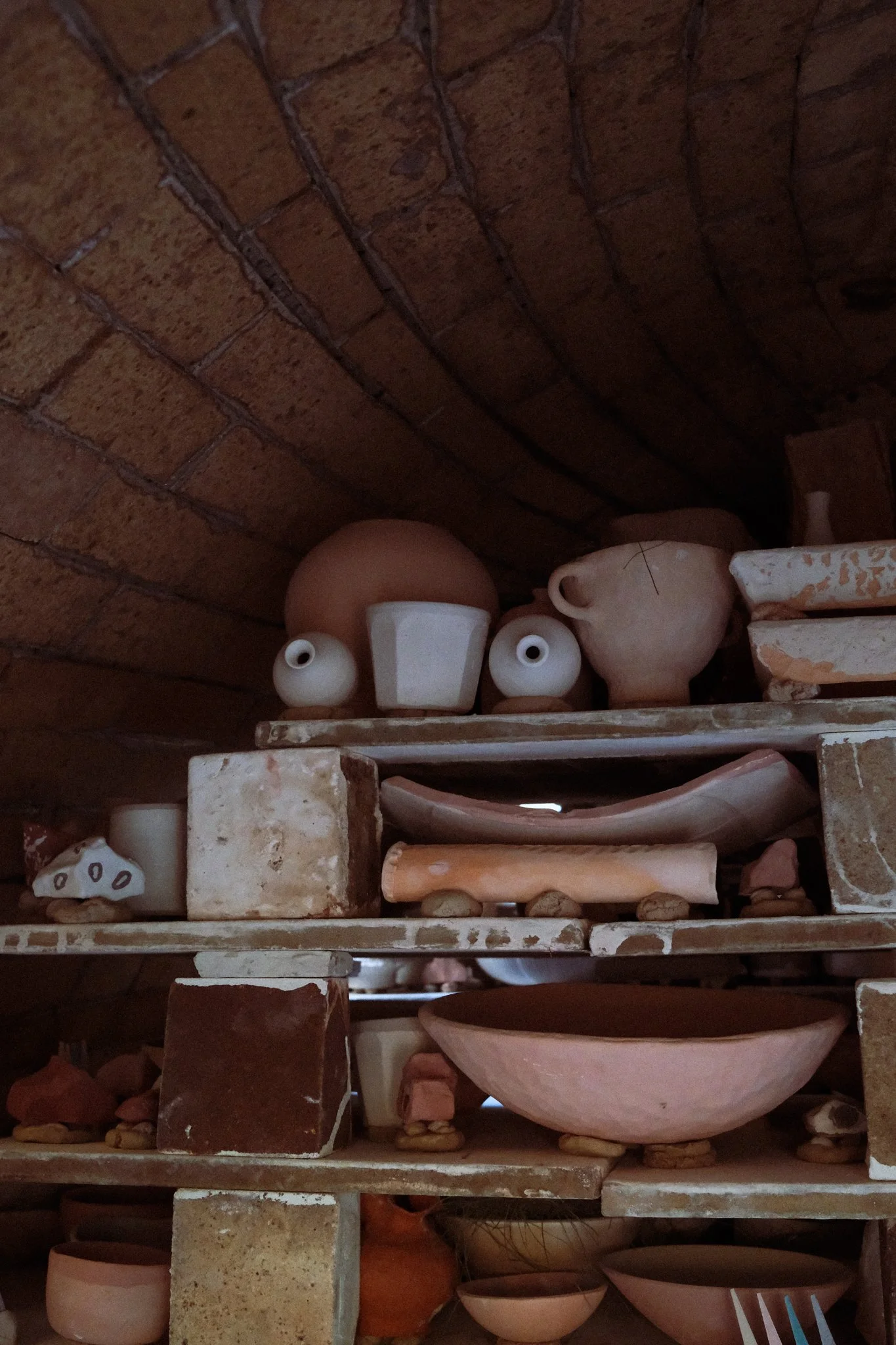
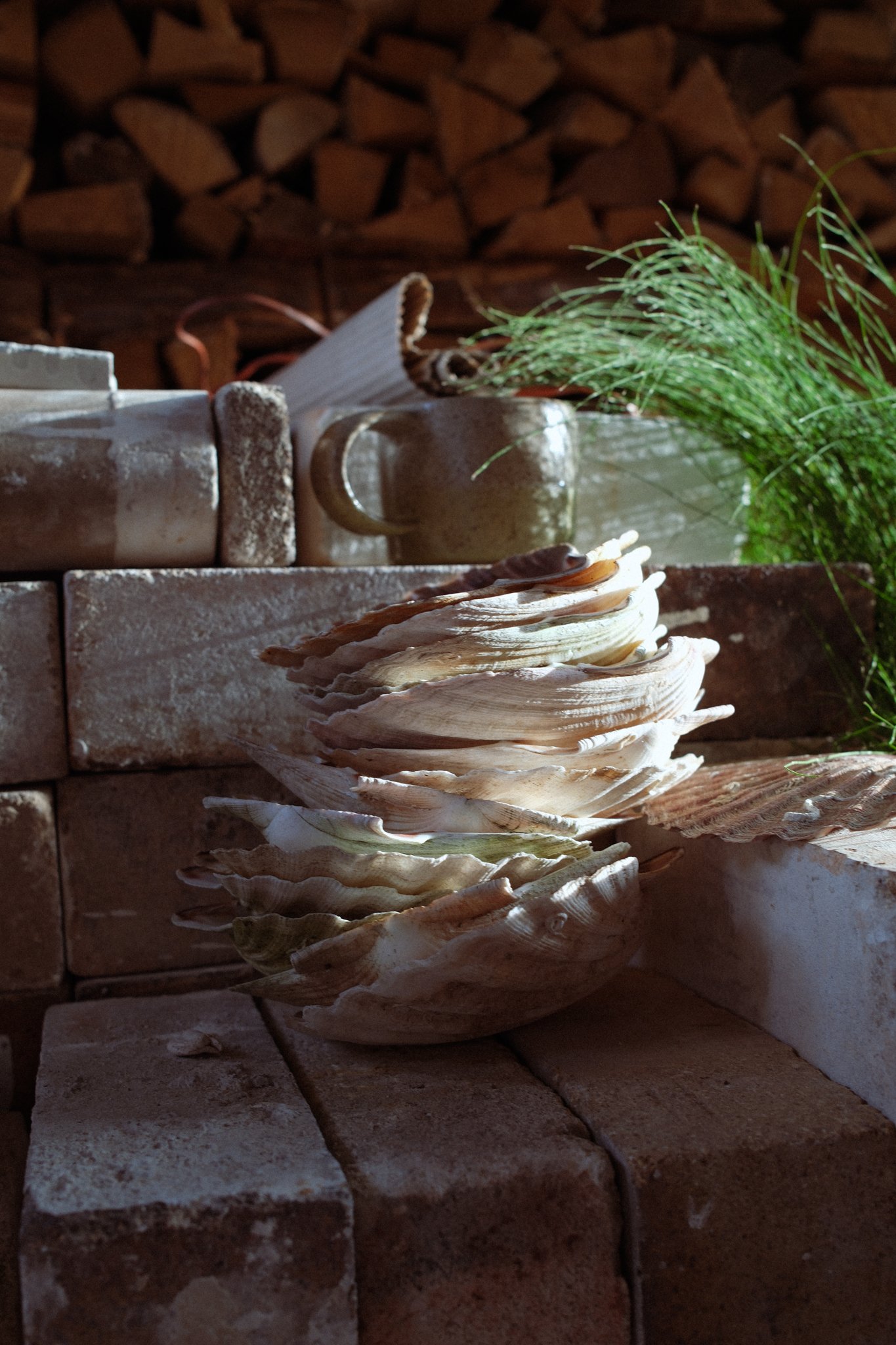
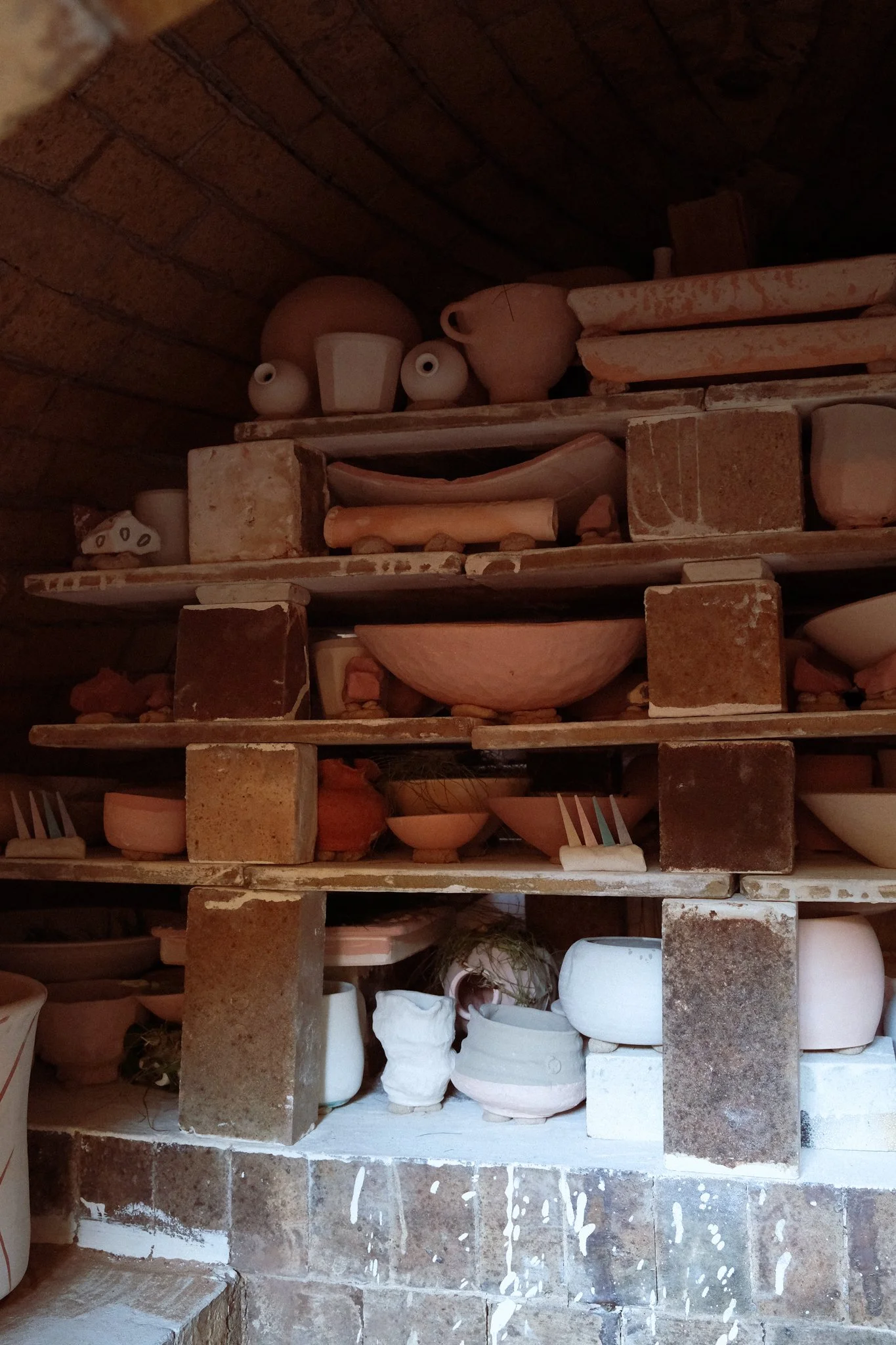
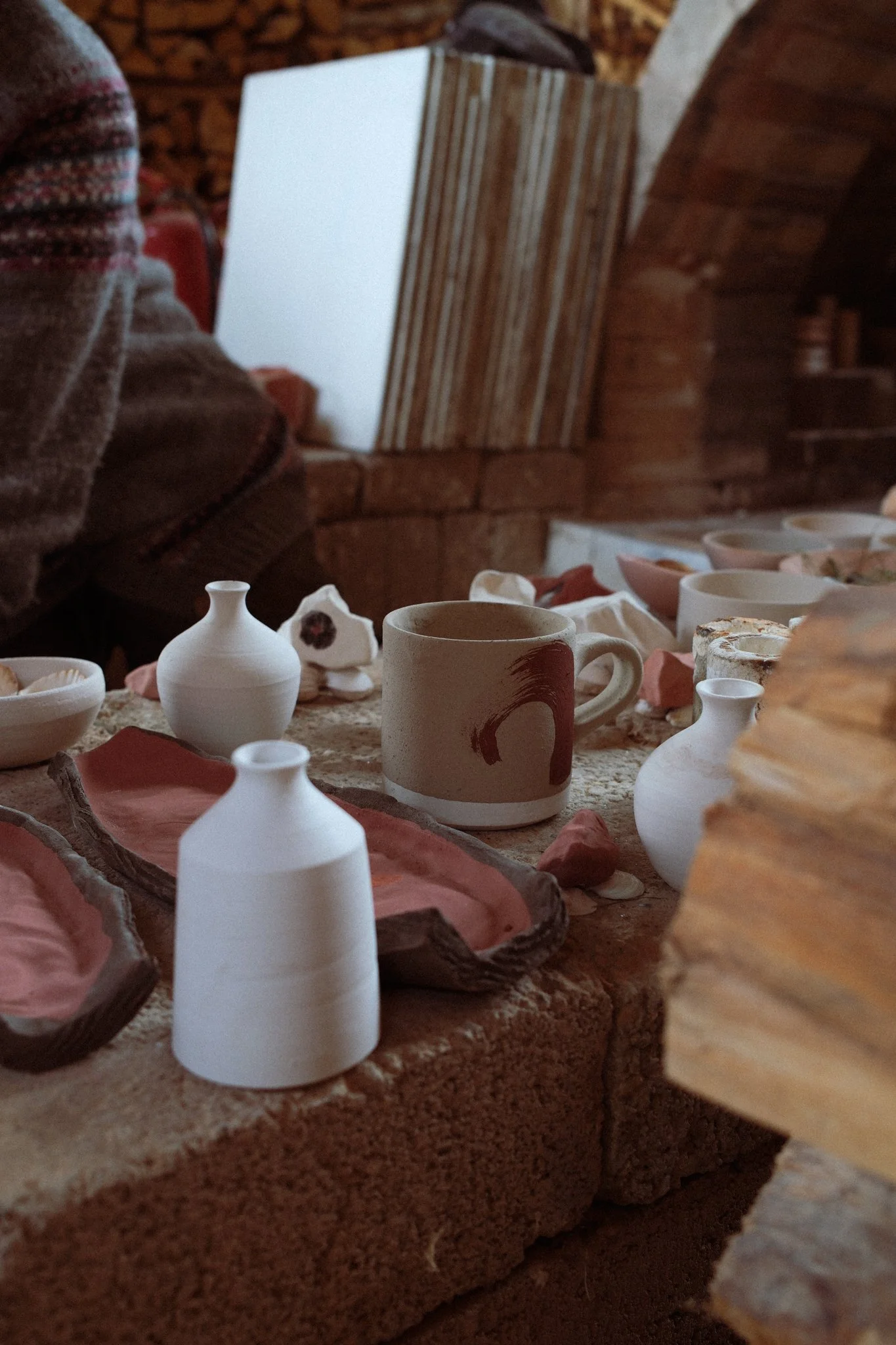
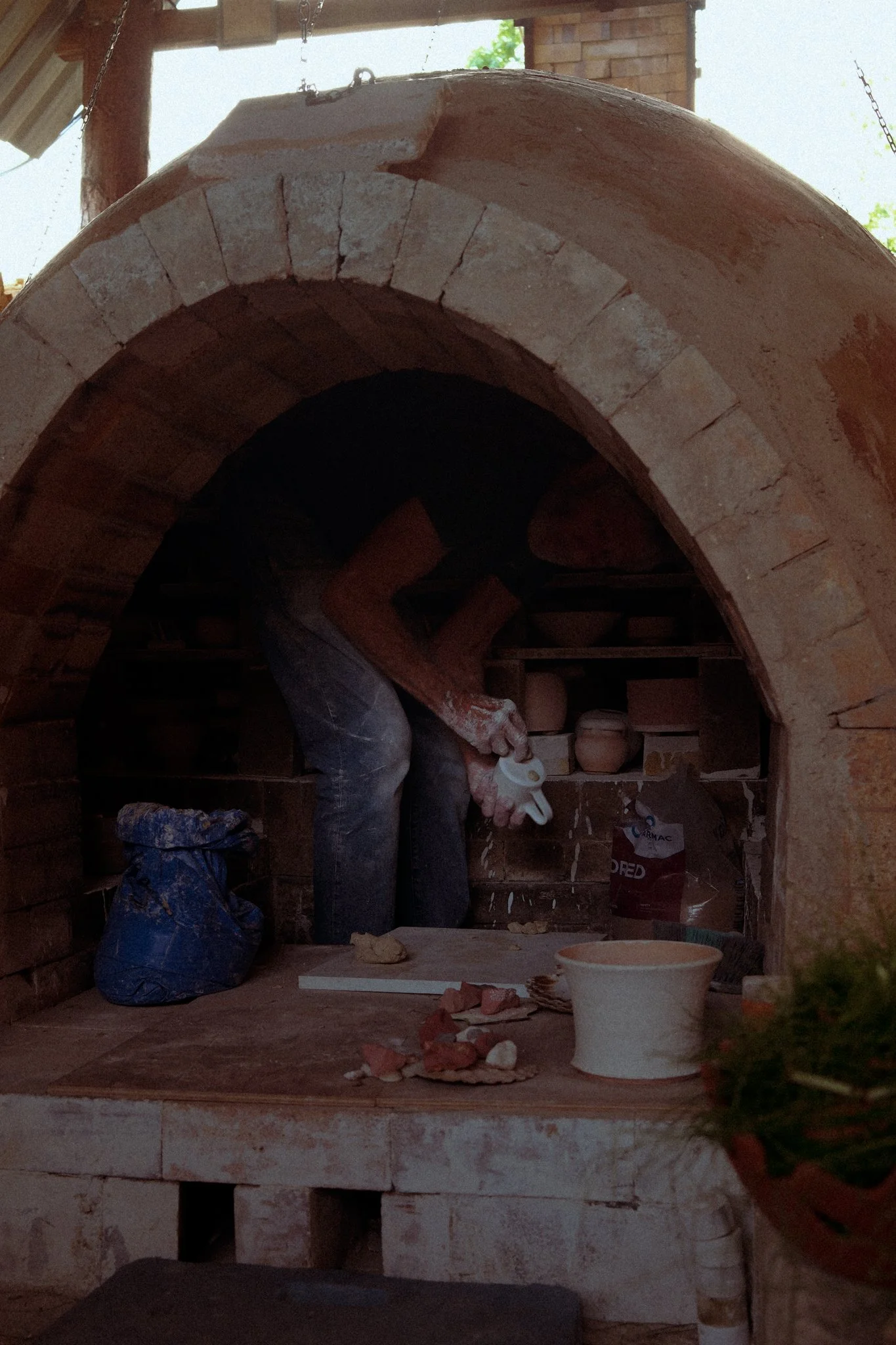
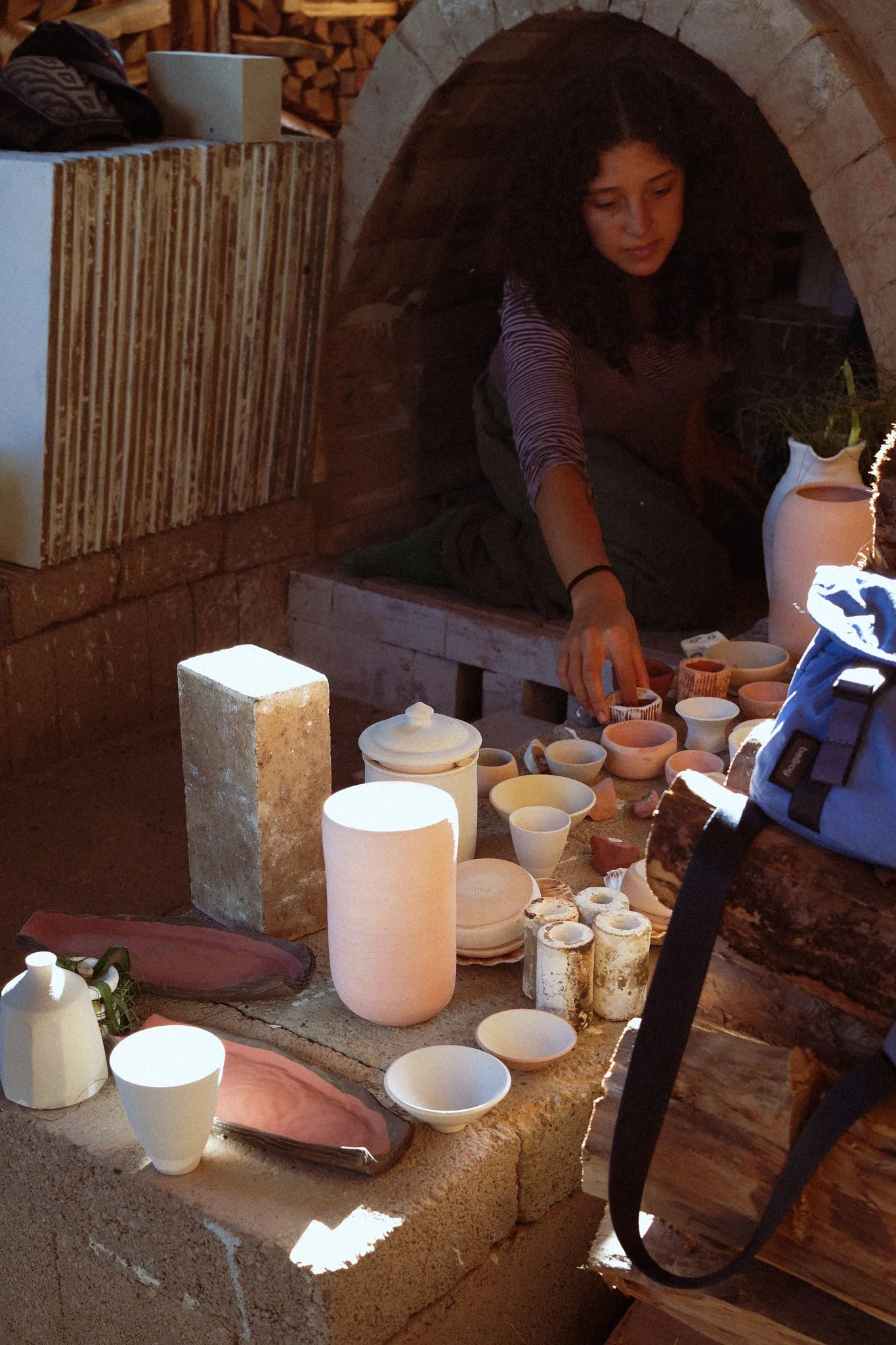
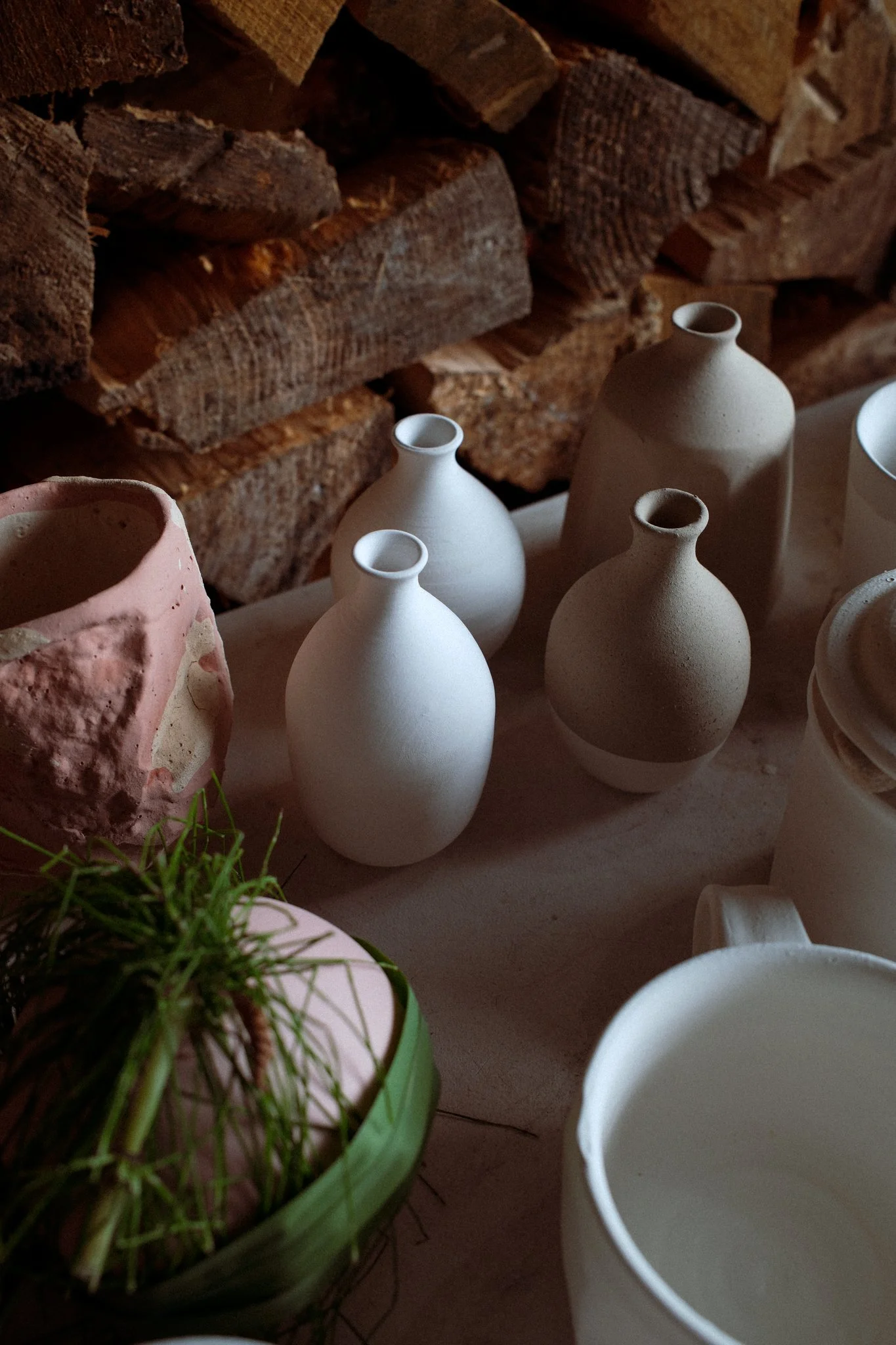
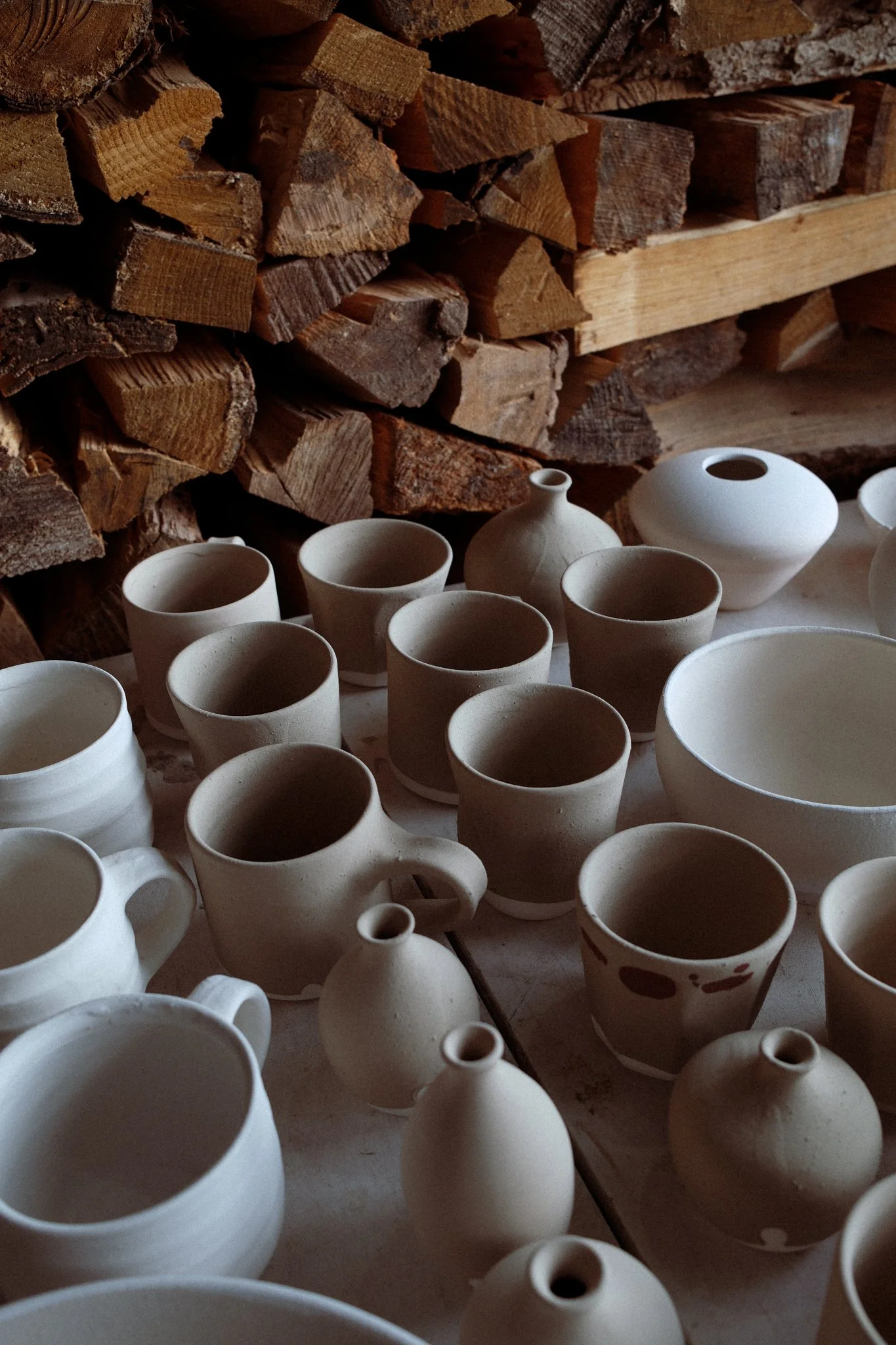
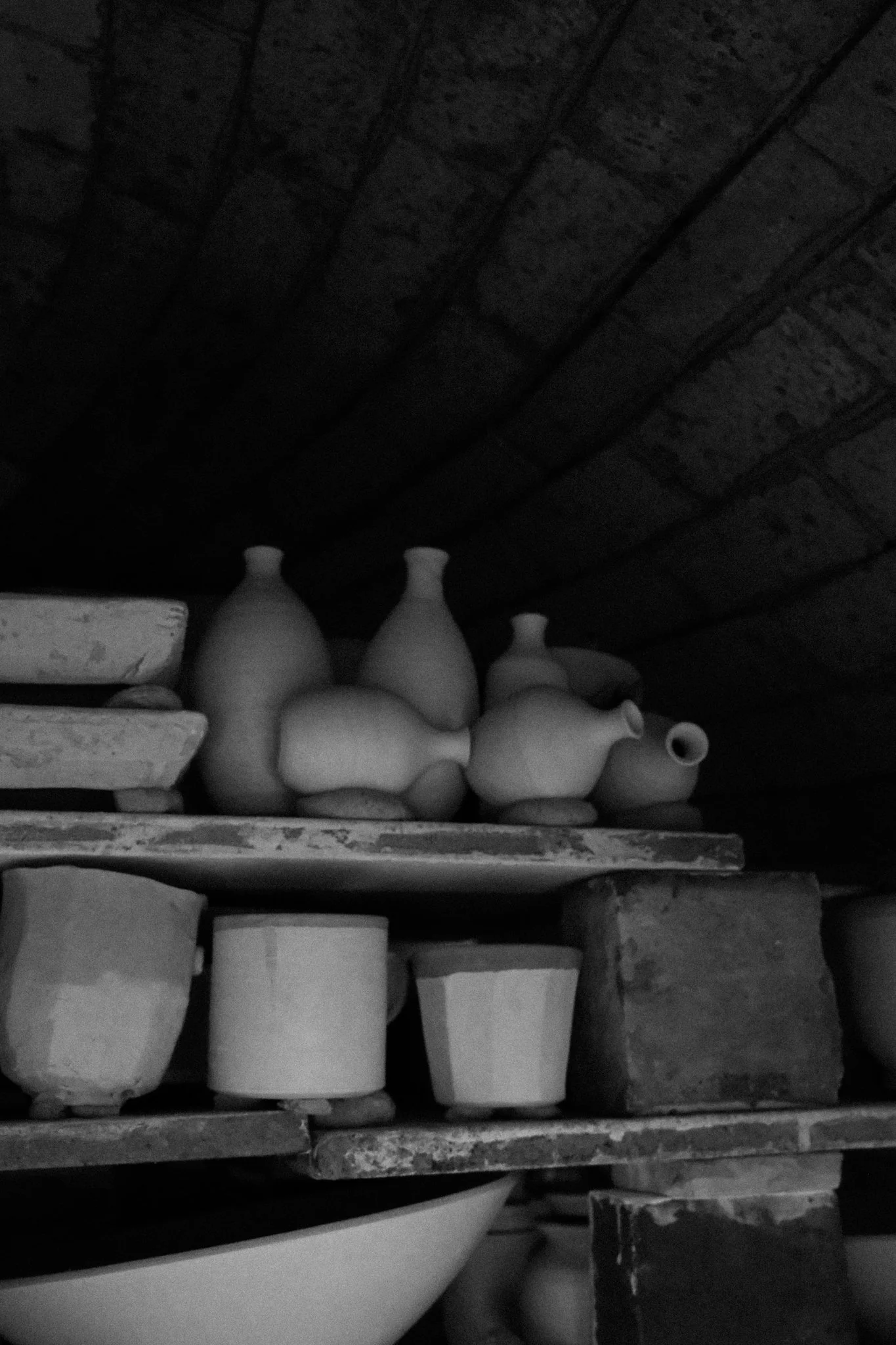
Pots are stacked in the kiln to navigate the flame's path through the chamber. The front stack near the firebox will be bombarded by heavy ash from the stoking - creating the most dramatic, scorched textures and surfaces on the clay bodies. Pieces further back in the chamber will be more subtle, catching delicate streams and flashing from licks of the flame. Throughout the kiln, airbourne wood ash lands on the pieces and, hopefully!, creates a natural ash glass on the surface.
We were very lucky to have Brigitte overseeing the pack of the kiln. Her experience and knowledge means that pots were strategically placed to create paths for the flame to create magic on the pieces.
You may have heard of potters referring to reduction firings. Until this Summer, all my work was fired in an oxidation atmosphere in an electric kiln, where the kiln always has a supply of oxygen.
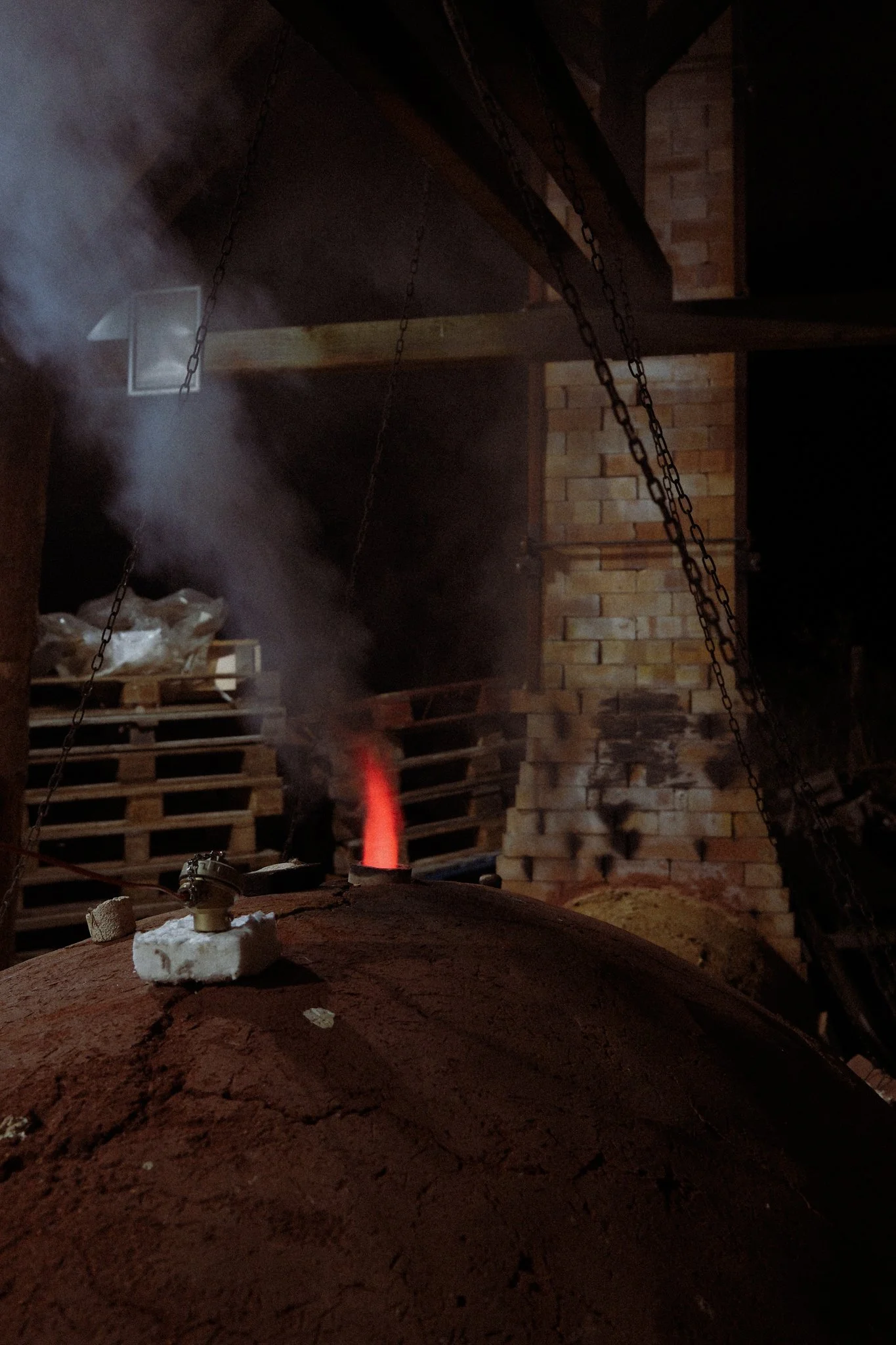
By adjusting the draft through a damper in the anagama chimney at around 950 degrees Celsius, we starved the kiln of oxygen which brings the kiln into what we call a reduction atmosphere. This draws oxygen molecules straight out of the clay bodies and glazes, chemically altering them into completely different colours than would be possible in oxidation. And thus, we have what is known as a reduction firing.
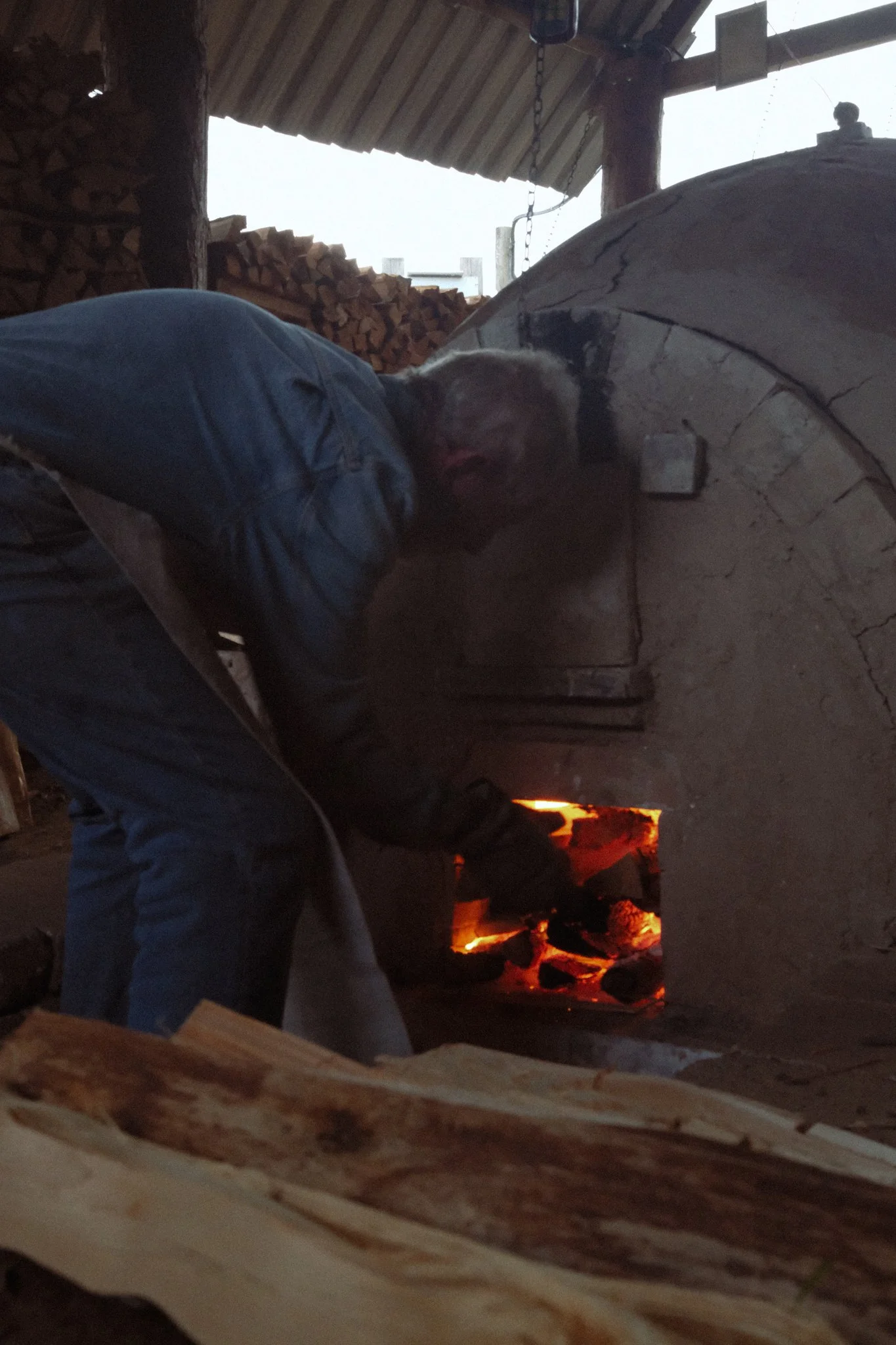
Every wood species carries a different mineral makeup. I have seen this variation a lot in the glazes I’ve made that contain wood ash - with greens from oak and blues from birch.
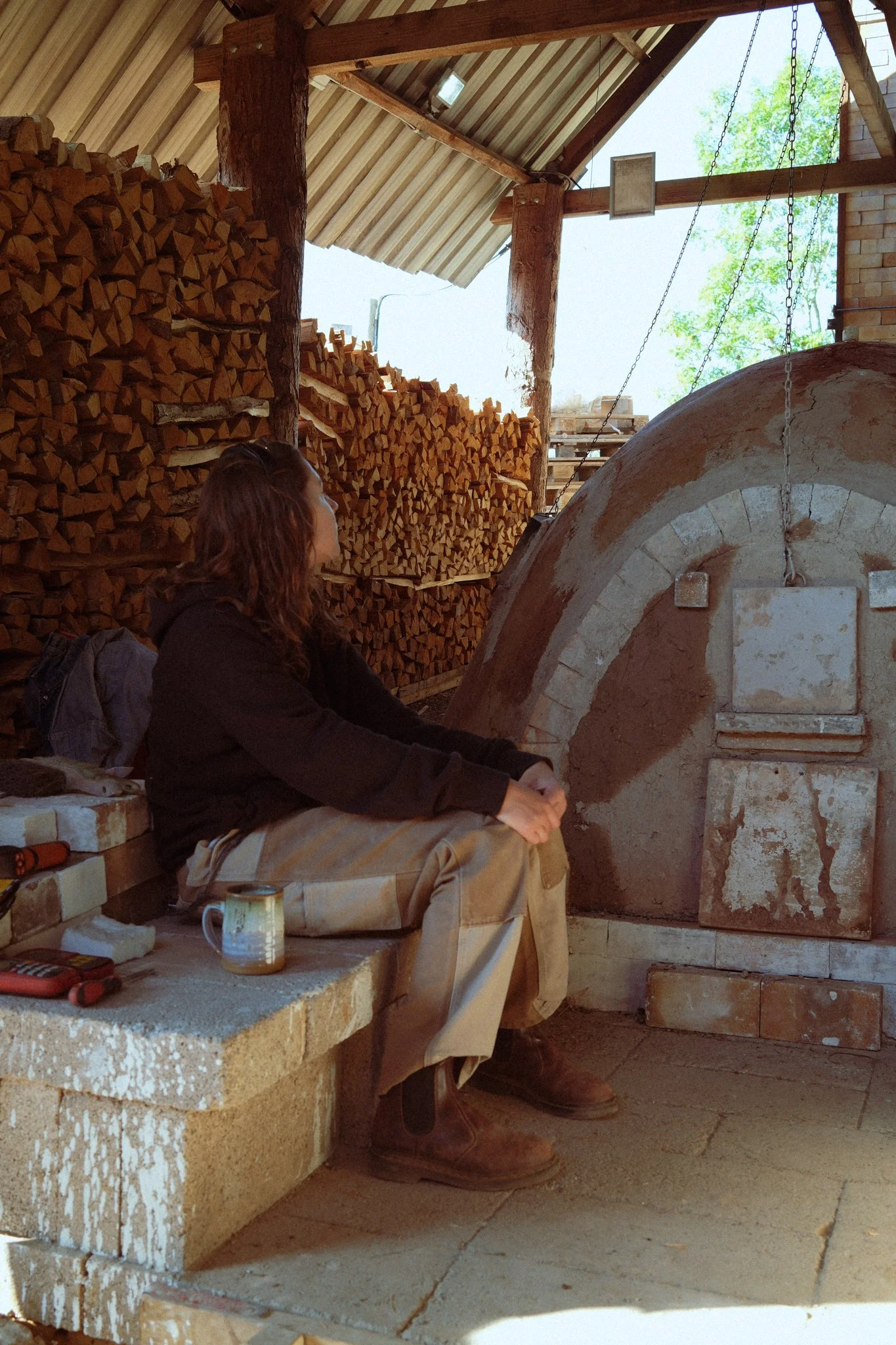
The wood type makes a difference when firing a kiln in this way, too, especially in these extended firings where ash is allowed to settle on surfaces. We were firing mainly with Douglas fir. As the wood burns, minerals from the wood itself in the form of ash are pulled into the river of heat rushing through the chamber, cascading over the pots.
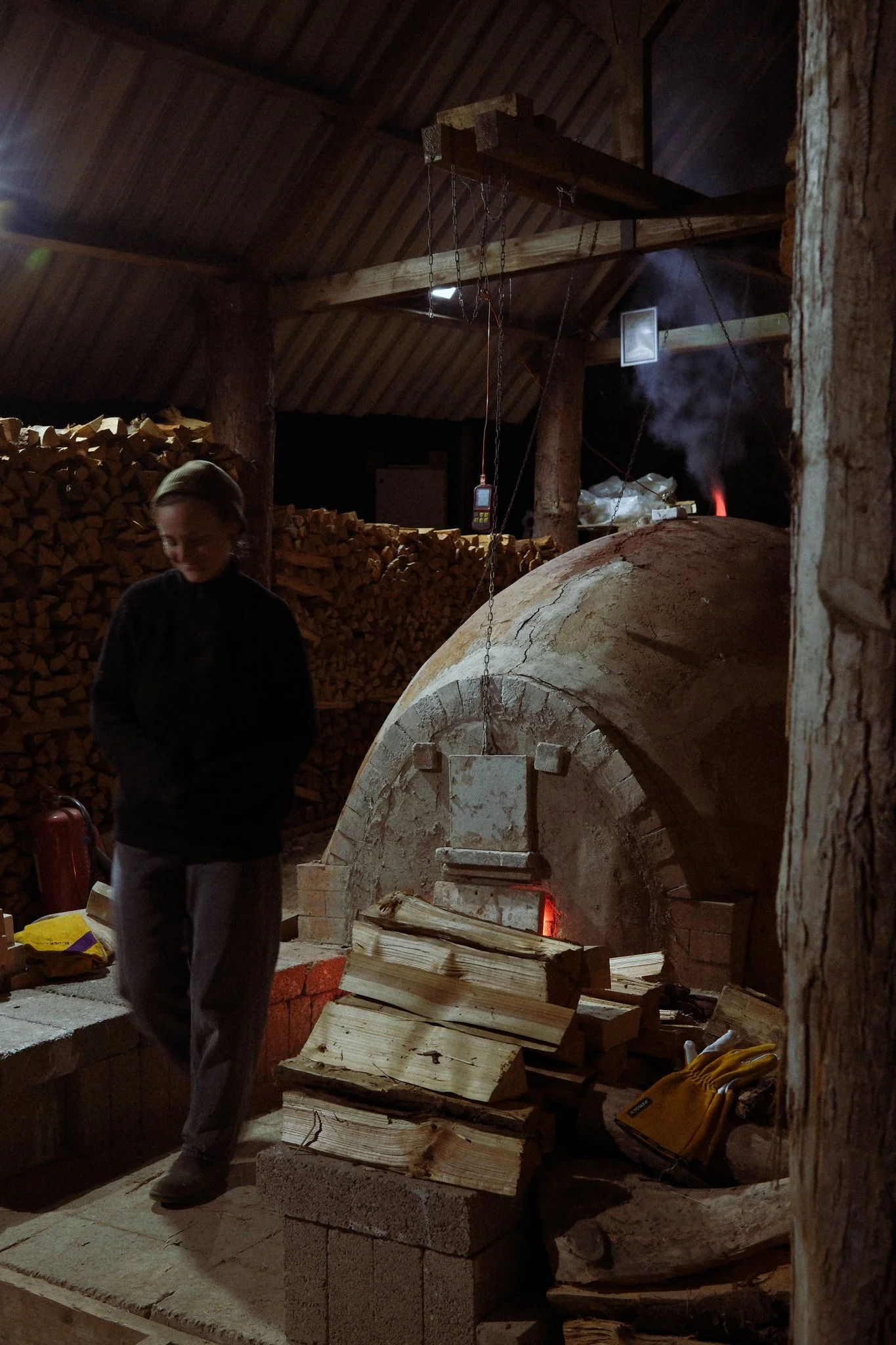
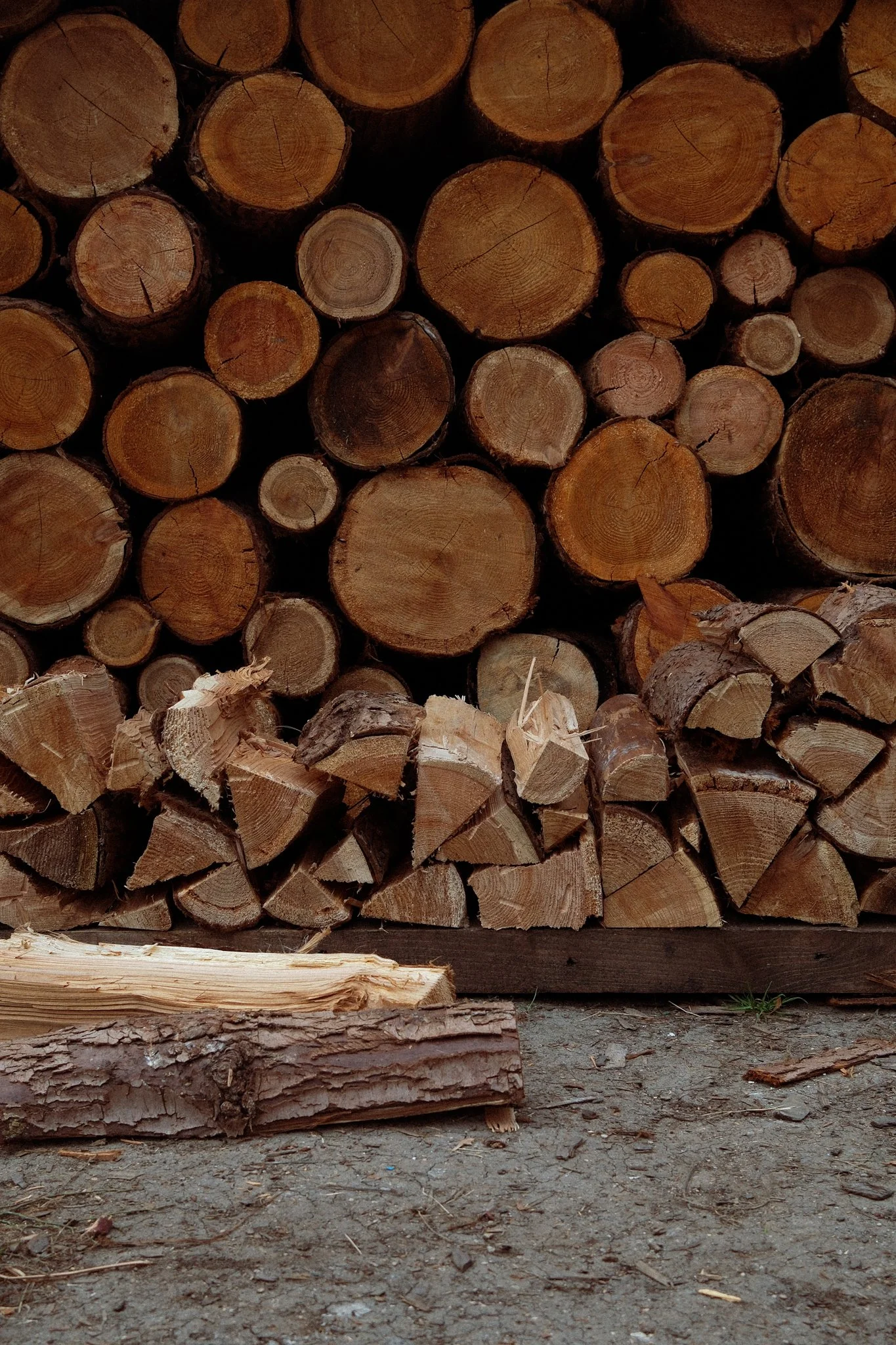
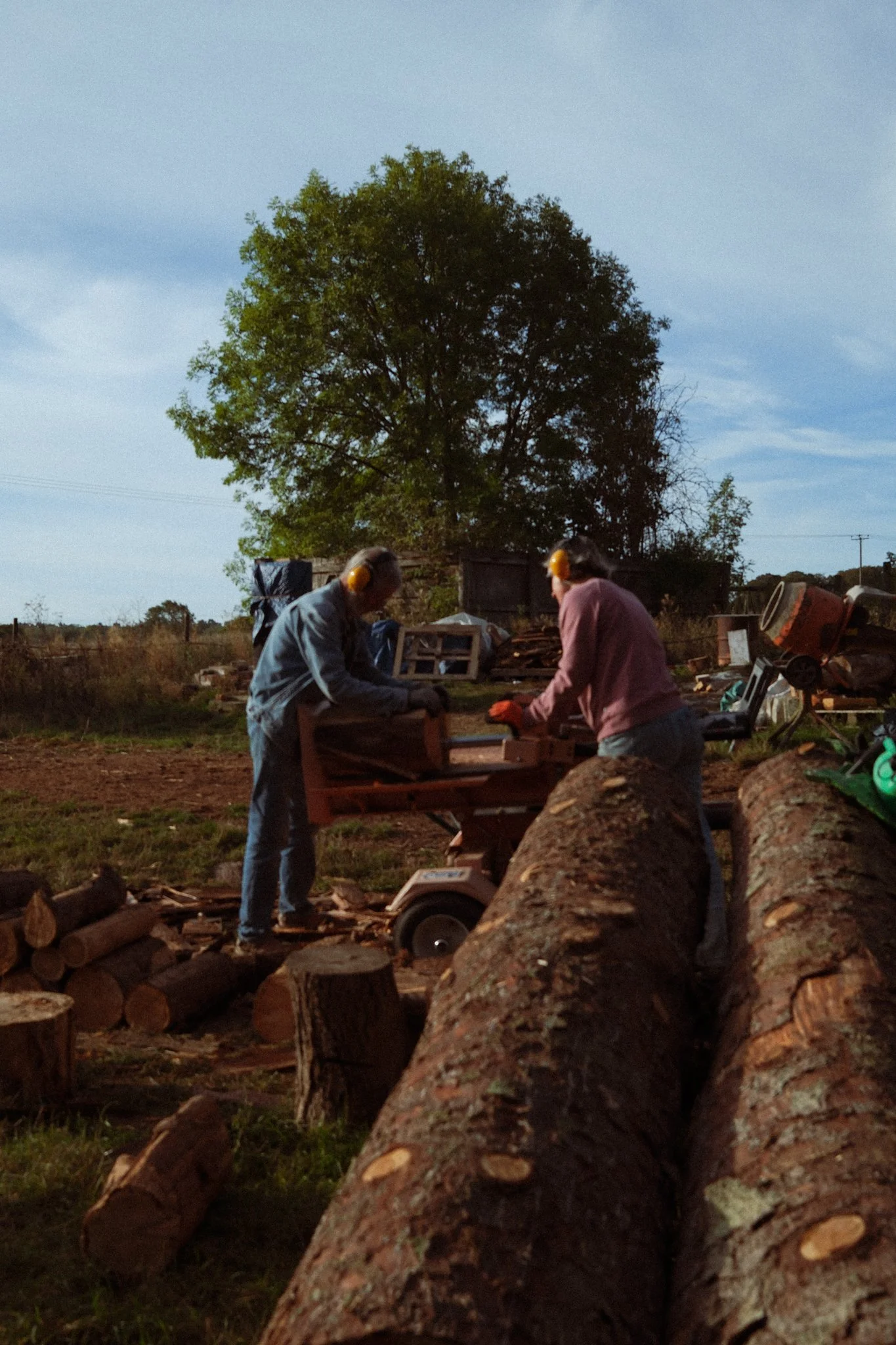
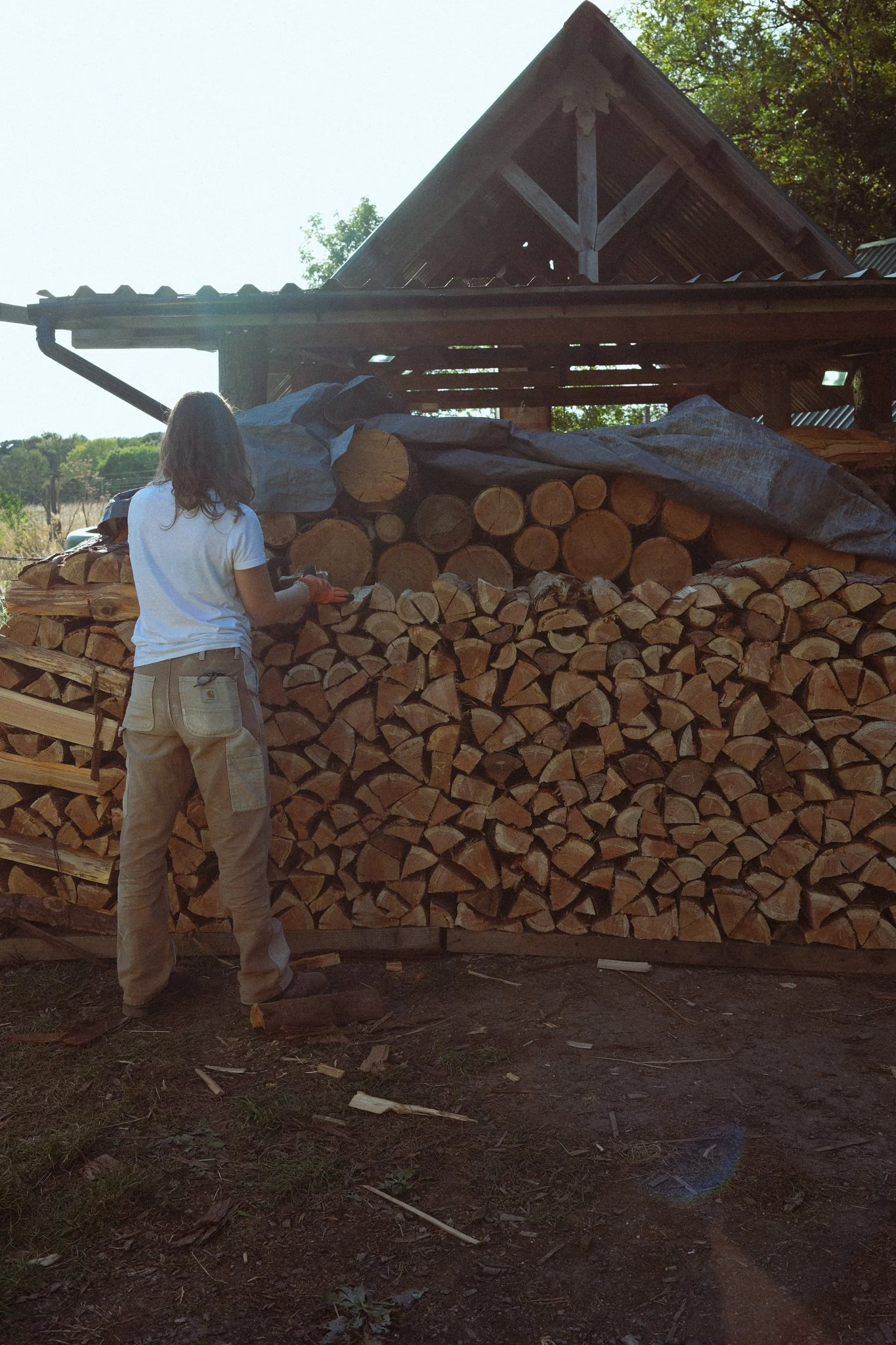
It’s important to note, also, that wood preparation is a big part of a firing like this. If we weren’t stacking the kiln, we were splitting and stacking wood. It’s an important part of the process, and one I wanted to note, which perhaps is not often portrayed in more romantic depictions of wood-firing. Wood-firing is hard, and can be quite gruelling work.
I am a glaze potter. Glaze chemistry fascinates me and I am always trying to learn more about it. The idea of not glazing my work is.. a little bizarre.
However - most pottery loaded into an anagama kiln is traditionally placed inside completely bare, at least on the outside of the pots with just a liner glaze on the interiors - to make the most of the naturally occurring ash and flame markings a firing of this type encourages. So I gave in to the process and have quite a few pots in this kiln either completely or partially unglazed.
Our firing ended up lasting 62 hours, which is when we reached our target temperature. 62 hours of intense shift work with my fellow potters - 4 hours on, 8 hours off.
62 hours of flame, ash and clay.
I am so excited to see what pushing my work out of my comfort zone by firing in this way will achieve. On Sunday, we all head back to Oxford to unload the kiln. I can’t wait to see everyone again, and to see the work we have all made together.
I hope to write another journal post about our results - regardless of how I feel about them! - which I will share in time. And of course, if I’m happy with the pots, there will be a small collection of wood-fired work available in my upcoming Winter online shop update.
You can watch a short film I made of our process on Instagram here.